tutorialMay 30, 2026·ML Mastery
Serving Multiple Users at Once: How Continuous Batching Keeps LLM Inference Efficient
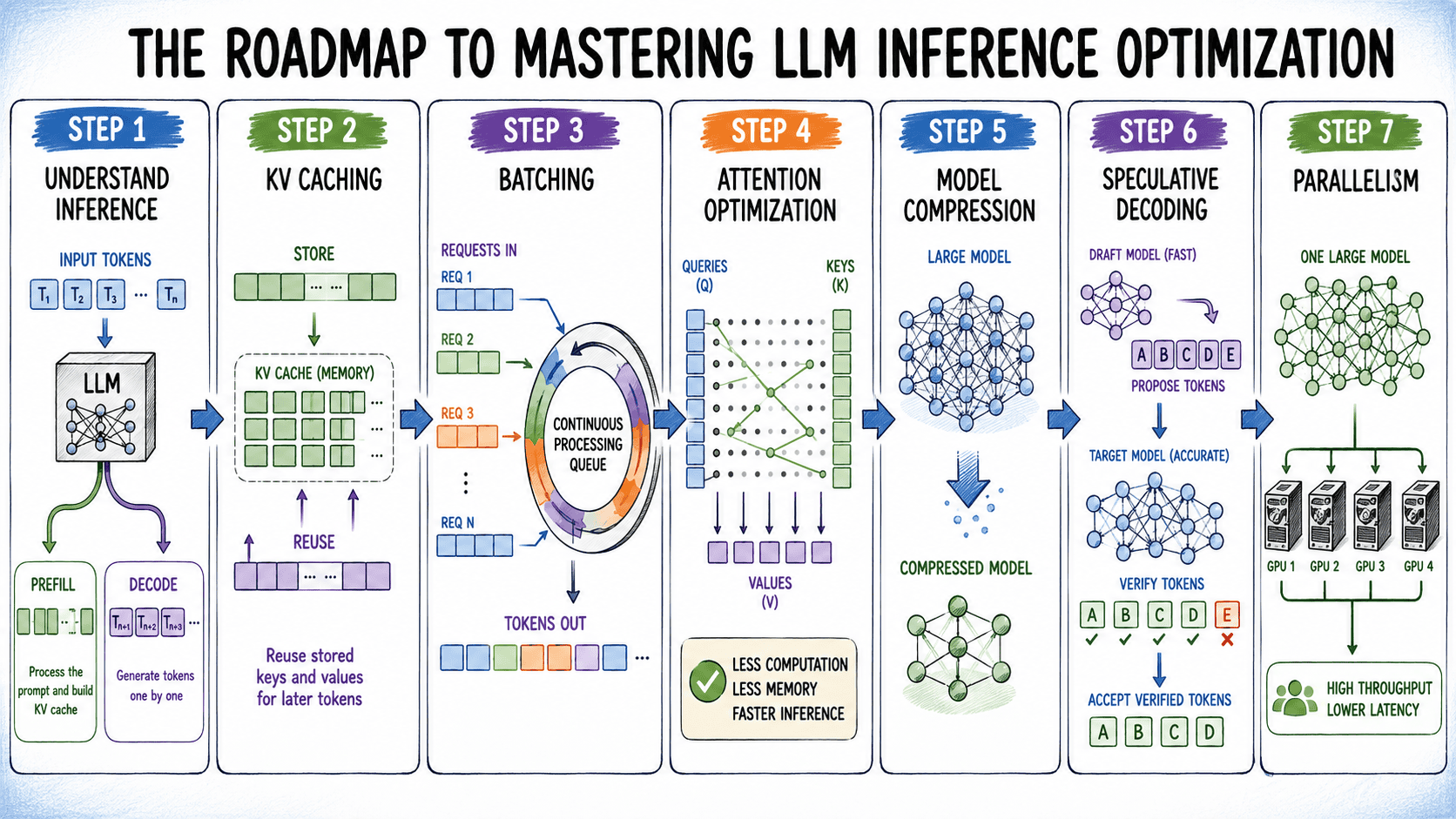
This article is divided into four parts; they are: • The Problem with Static Batching • Code Example of Static Batching • Continuous Batching: Dynamic Scheduling and Ragged Batching • Full Implementation The simplest way to serve multiple requests together is to use static batching, by grouping them

This article is divided into four parts; they are: • The Problem with Static Batching • Code Example of Static Batching • Continuous Batching: Dynamic Scheduling and Ragged Batching • Full Implementation The simplest way to serve multiple requests together is to use static batching, by grouping them into fixed-size batches and processing each batch together.
Key Takeaways
- •This article is divided into four parts; they are: • The Problem with Static Batching • Code Example of Static Batching • Continuous Batching: Dynamic Scheduling and Ragged Batching • Full Implementation The simplest way to serve multiple requests together is to use static batching, by grouping them
- •This story was reported by ML Mastery, covering developments in the tutorial space.
- •AI advancements continue to reshape industries — read the full article on ML Mastery for complete coverage.
📖 Continue reading the full article:
Read Full Article on ML Mastery →